

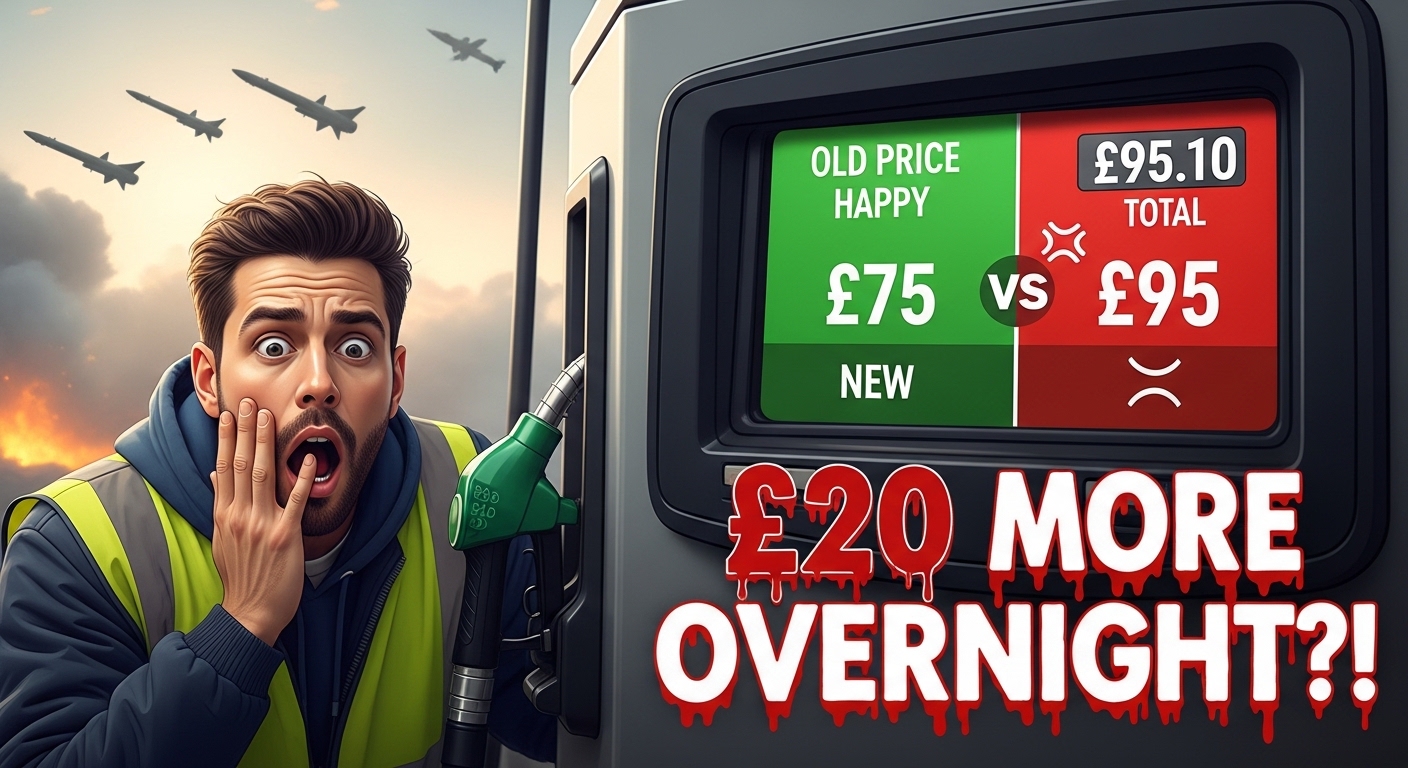
UK Diesel Prices Exploded
Fuel prices in the UK have surged again, with many drivers now paying £95 or more for a full tank. The sudden jump has left motorists frustrated and questioning why costs are rising so quickly.
Recent data shows diesel prices have climbed sharply in just weeks, with increases of around 20–24p per litre since geopolitical tensions escalated.
This rapid increase means filling an average family car now costs around £91+ for diesel, with further rises expected.
🎥 Watch the Full Video
📈 How Much Prices Have Actually Increased
Fuel prices haven’t just risen slightly — they’ve jumped quickly:
- Diesel increased roughly 23–24p per litre in three weeks
- Average diesel price climbed to around 166p per litre
- Filling a tank now costs about £13 more than earlier in the month
These figures come from UK fuel data tracking recent pump increases.
In some projections, diesel could even approach £2 per litre, pushing a full tank toward £110.
⚠️ Why UK Diesel Prices Exploded
Several factors are driving the surge:
1. Global Oil Supply Disruptions
Geopolitical tensions in the Middle East have pushed oil prices higher, which feeds directly into UK pump prices.
2. Rising Wholesale Costs
Higher crude oil prices increase refinery and distribution costs.
3. Weak Competition at Forecourts
Drivers can sometimes pay up to 20p more per litre depending on location.
4. Market Volatility
Oil markets react quickly to supply risks, causing sudden jumps.
⛽ Why a Tank Now Costs £95+
Let’s break it down:
Example:
- Diesel price ≈ 166p per litre
- Average tank ≈ 55 litres
- Total ≈ £91–£95+
This aligns with current UK estimates for filling a family car.
If prices climb further, tanks could exceed £100 regularly.
🧠 Why Drivers Are Frustrated
Rising fuel costs impact:
- Commuting costs
- Delivery drivers
- Tradespeople
- Rural households
- Small businesses
Fuel price increases also ripple into:
- Food prices
- Transport costs
- Inflation
This creates wider cost-of-living pressure.
📉 Could Prices Rise Even More?
Experts warn further increases are possible:
- Oil prices remain volatile
- Demand remains strong
- Supply risks continue
- Seasonal travel increases demand
Some forecasts suggest diesel could hit £1.80 per litre or higher if trends continue.
💡 How Drivers Can Reduce Fuel Costs
While prices are out of individual control, you can:
- Compare local fuel stations
- Avoid motorway services
- Drive smoothly and reduce acceleration
- Check tyre pressure
- Combine journeys
Supermarket fuel stations are often cheaper than branded forecourts.
🔗 Related Articles (Internal Links)
You can paste this directly:
Free Net Worth Calculator (2026)
https://thetemplatejudge.com/free-net-worth-calculator-2026/
Why Nvidia, AMD, and AI Stocks Suddenly Fell — And What Most People Miss
https://thetemplatejudge.com/why-nvidia-amd-ai-stocks-fell/
Who Can Afford a $250k House? (2026 Reality Breakdown)
https://thetemplatejudge.com/who-can-afford-a-250k-house/
Why Being Broke Is a Full Time Job
https://thetemplatejudge.com/why-being-broke-is-a-full-time-job/
I Tried Being Financially Responsible — It Was Terrible
https://thetemplatejudge.com/being-financially-responsible-was-terrible/
🌐 Helpful External Resources
- Investopedia — Delayed Gratification
https://www.investopedia.com/terms/d/delayed-gratification.asp - Behavioural Economics — Habits & Decision Making
https://www.behaviouraleconomics.com/resources/mini-encyclopedia/habits/ - MoneyHelper UK — Budgeting & Financial Discipline
https://www.moneyhelper.org.uk/
❓ FAQ — UK Diesel Prices
Why did diesel prices rise so quickly?
Global oil supply disruptions and market volatility pushed prices higher.
Why is diesel more expensive than petrol?
Different refining costs and demand patterns affect pricing.
Will fuel prices drop soon?
It depends on oil supply stability and global events.
How much is a full tank now?
Around £90–£100 depending on vehicle size and location.
Final Thoughts
The reason UK diesel prices exploded is a mix of global supply pressure, market volatility, and domestic pricing factors. For drivers, this means higher daily costs — and potentially more increases ahead.
Understanding what’s driving the rise helps you plan, budget, and adjust where possible.