


A sitemap generator tool helps you create an XML sitemap for your website. This file lists all important pages so search engines can crawl and index them more efficiently.
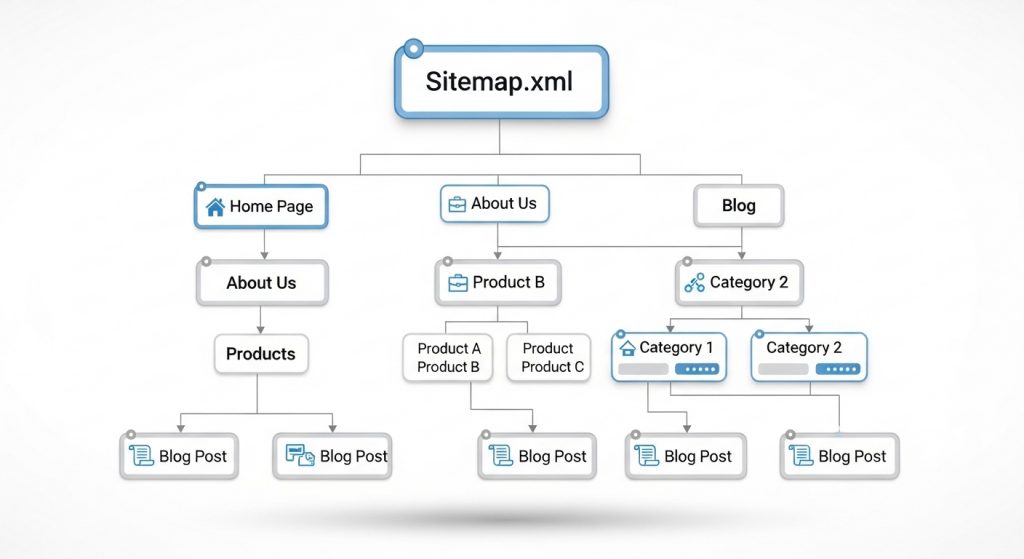
Sitemaps act as a blueprint of your site, guiding search engines to discover and understand your content structure.
Therefore, using a sitemap generator improves indexing and helps new pages get discovered faster.
XML Sitemap Generator
Generate an XML sitemap for your website to help search engines crawl your pages.
XML Preview
What Is a Sitemap Generator Tool?
A sitemap generator tool automatically creates a sitemap file containing your website URLs. This helps search engines understand your site hierarchy and crawl pages more effectively.
Instead of manually listing pages, the tool scans your site and builds an XML sitemap. Consequently, you save time and reduce errors.
Why Sitemap Generator Tools Matter for SEO
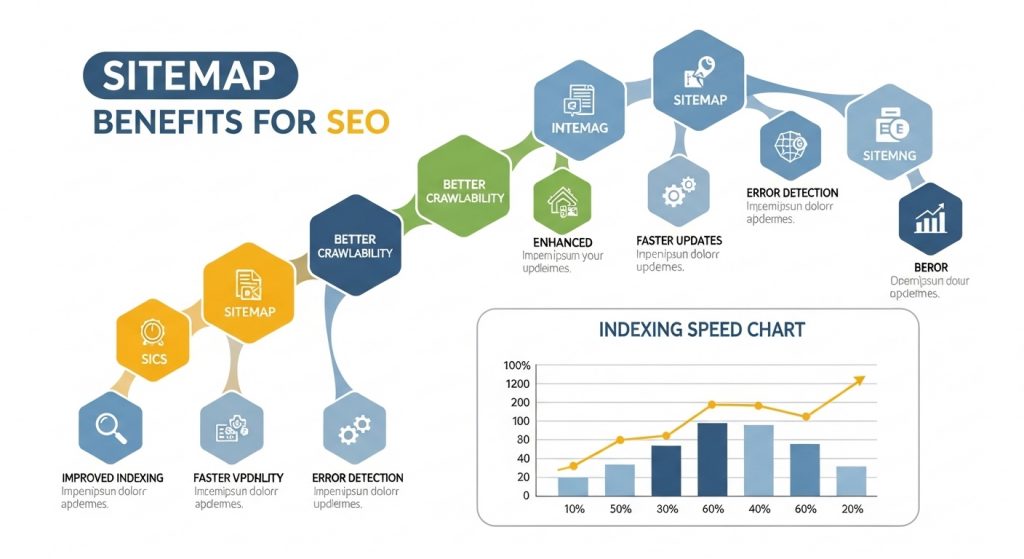
Using a sitemap generator improves SEO in multiple ways:
- Helps search engines discover pages
- Speeds up indexing
- Improves crawl efficiency
- Identifies orphan pages
- Supports large websites
XML sitemaps ensure even deeply nested pages are found and indexed properly.
How to Use This Sitemap Generator Tool
Follow these simple steps:
- Enter your website URL
- Generate sitemap
- Download XML file
- Upload to website root
- Submit to search engines
Submitting the sitemap helps search engines crawl your content faster and more efficiently.
XML Sitemap vs HTML Sitemap
There are two main sitemap types:
XML Sitemap
- Designed for search engines
- Improves crawlability
- Contains metadata
HTML Sitemap
- Designed for users
- Improves navigation
- Helps site structure
Both types can improve discoverability and site organization.
When You Should Use a Sitemap Generator Tool
A sitemap generator is especially useful if:
- Your site has many pages
- You publish content frequently
- You have deep page structure
- Internal linking is limited
- Website is new
Search engines may miss pages without a sitemap, particularly on large or complex websites.
Best Practices for Sitemap SEO
To maximize SEO impact:
- Include important pages only
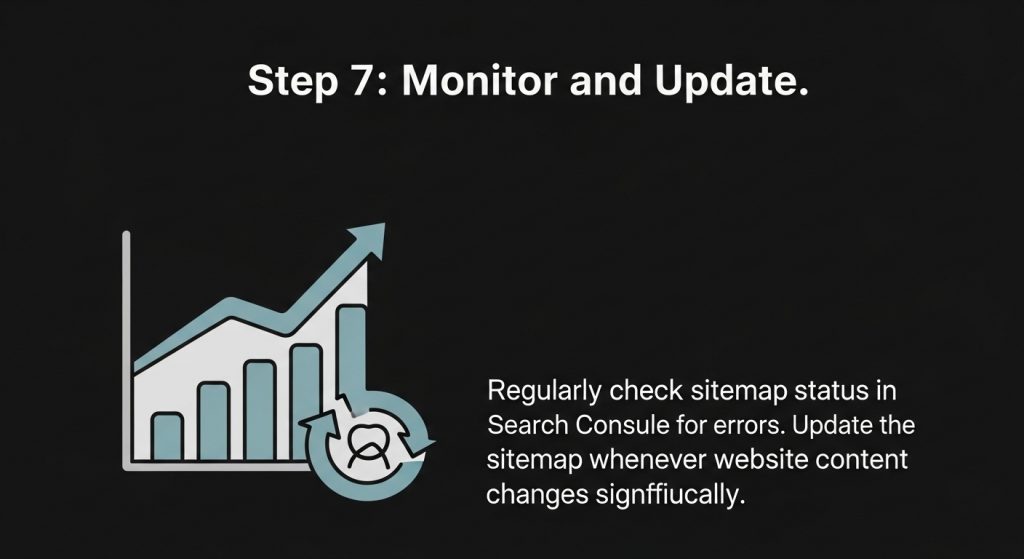
- Update sitemap regularly
- Remove broken links
- Submit to Google Search Console
- Keep sitemap clean
These steps improve crawl efficiency and indexing performance.
FAQ
What is a sitemap generator tool?
A sitemap generator tool creates an XML file listing your website pages for search engines.
Does a sitemap improve SEO?
Yes. Sitemaps help search engines discover pages faster and improve indexing.
🔗 Related Articles from The Template Judge
Here are some helpful guides and popular posts from The Template Judge that go well with this topic and boost your internal linking (good for SEO and user engagement):
Nobody Shows This Part of Dividend Investing
https://thetemplatejudge.com/nobody-shows-this-part-of-dividend-investing/
How to Get Google AdSense Approved in 2025 (WordPress Themes & Plugins That Work)
https://thetemplatejudge.com/how-to-get-google-adsense-approved-in-2025/
How Much Can You Make With AdSense on WordPress? (2026 Breakdown)
https://thetemplatejudge.com/how-much-can-you-make-with-adsense-on-wordpress-2026-breakdown/
WordPress Tool Website Tutorial (Beginner Friendly)
https://thetemplatejudge.com/wordpress-tool-website-tutorial-beginner-friendly/
The BEST Website Design in WordPress (Real Examples)
https://thetemplatejudge.com/the-best-website-design-in-wordpress-real-examples/
Portfolio Website Design Ideas — Templates That Actually Convert
https://thetemplatejudge.com/portfolio-website-design-ideas-templates-that-actually-convert/
🌐 Helpful External Resources
- Investopedia — Delayed Gratification
https://www.investopedia.com/terms/d/delayed-gratification.asp - Behavioural Economics — Habits & Decision Making
https://www.behaviouraleconomics.com/resources/mini-encyclopedia/habits/ - MoneyHelper UK — Budgeting & Financial Discipline
https://www.moneyhelper.org.uk/
How to Use the Sitemap Generator
- Enter your website URL into the tool.
- Let it crawl and list the important pages on your site.
- Generate the XML sitemap file.
- Upload the sitemap to your site root and submit it in Google Search Console.
How to Read and Use the Sitemap
An XML sitemap is a structured list of your site’s important URLs. It acts as a map that helps search engines discover and index your pages more efficiently, which is especially valuable for new sites or pages with few internal links. Once generated, the sitemap is usually saved as sitemap.xml in your site root and submitted to Google Search Console so Google knows where to find it.
Tips to Get the Most Out of This Tool
- Submit your sitemap to Google Search Console and Bing Webmaster Tools for faster discovery.
- Keep the sitemap updated as you add or remove pages — most SEO plugins do this automatically.
- Exclude thin, duplicate, or no-index pages so search engines focus on your best content.
- Reference your sitemap URL in your robots.txt file so crawlers find it easily.
Frequently Asked Questions
Do I need a sitemap if I use WordPress?
Most SEO plugins (Rank Math, Yoast) generate one automatically. This tool is handy for static sites or a quick manual sitemap.
Where do I submit my sitemap?
In Google Search Console under the Sitemaps section, and in Bing Webmaster Tools. Submitting helps search engines crawl your site faster.
How often should the sitemap update?
Whenever you add or remove important pages. Automated sitemaps handle this for you; a manual one should be regenerated after major changes.