

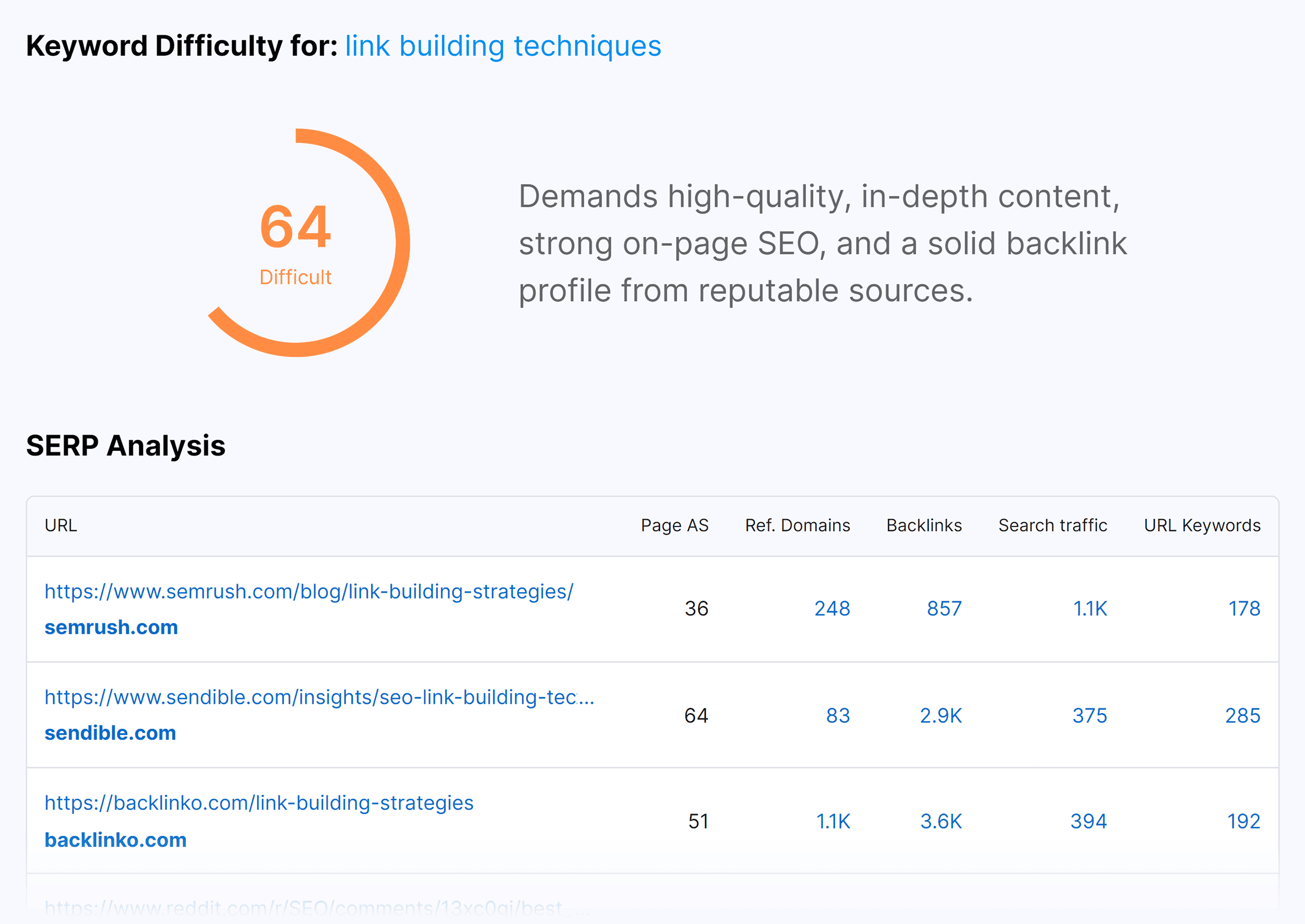
A keyword difficulty checker helps you determine how hard it is to rank for a specific keyword. This allows you to target easier keywords and improve your chances of ranking on Google faster.
Keyword difficulty is typically measured on a scale from 0 to 100, where lower scores are easier to rank and higher scores are more competitive.
Keyword Difficulty Checker
Estimate how difficult it is to rank for a keyword in Google.
What is Keyword Difficulty?
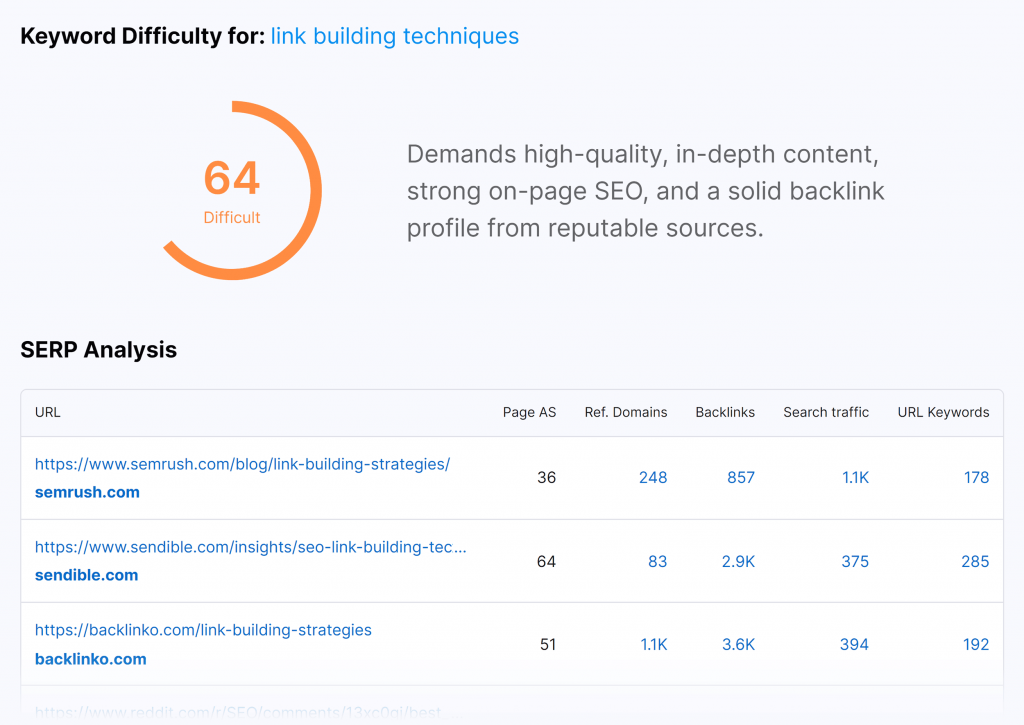
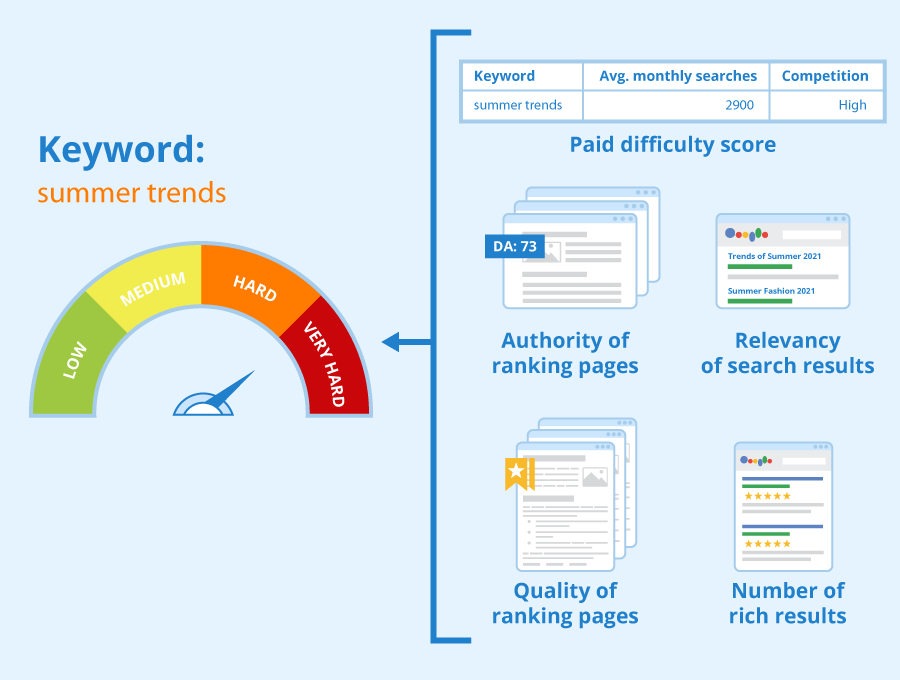
Keyword difficulty is an SEO metric that estimates how hard it would be to rank on page one of search results for a given keyword.
This score considers factors like:
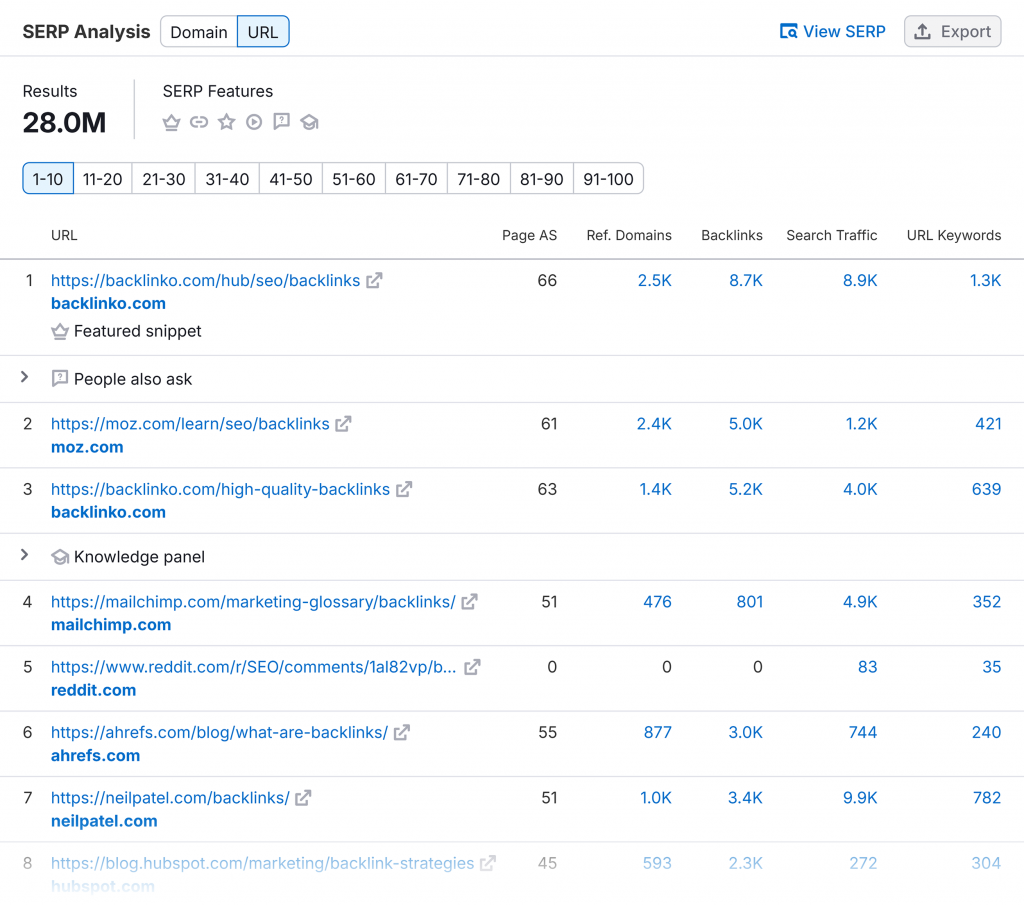
- Backlinks of ranking pages
- Domain authority of competitors
- Content quality
- Search intent
- Overall competition
Higher competition keywords typically have stronger websites already ranking, making them harder to outrank.
Why Keyword Difficulty Matters for SEO
Using a keyword difficulty checker helps you:
- Find low competition keywords
- Improve ranking chances
- Build smarter content strategy
- Save time targeting achievable keywords
- Increase organic traffic faster
Keyword difficulty helps marketers identify keywords they can realistically rank for, making SEO efforts more efficient.
How to Use the Keyword Difficulty Checker
- Enter your target keyword
- Click analyze
- Review difficulty score
- Compare with search volume
- Choose low-competition opportunities
Many keyword tools combine difficulty with metrics like search volume and competition to improve decision-making.
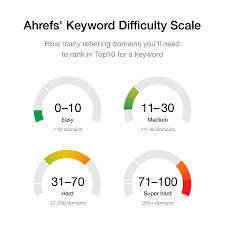
What is a Good Keyword Difficulty Score?
- 0–20 → Very Easy (ideal for new sites)
- 21–40 → Easy (good ranking potential)
- 41–60 → Medium (moderate competition)
- 61–80 → Hard (requires strong SEO)
- 81–100 → Very Hard (high authority sites dominate)
Most new websites should target low to medium difficulty keywords first to build authority gradually.
When to Target High Difficulty Keywords
You can target competitive keywords when:
- Your domain authority is strong
- You have backlinks
- You publish long-form content
- You build topical authority
Keyword difficulty depends heavily on a site’s backlink profile and authority level.
FAQ – Keyword Difficulty Checker
What is keyword difficulty?
Keyword difficulty measures how hard it is to rank for a keyword in search engines.
What is a good keyword difficulty?
Low to medium difficulty keywords are best for new websites.
Should I avoid high difficulty keywords?
Not always, but they usually require more authority and backlinks.
Our Other Tools
SEO Audit Tool
https://thetemplatejudge.com/seo-audit-tool/
Free Keyword Tool
https://thetemplatejudge.com/free-keyword-tool/
SERP Preview Tool
https://thetemplatejudge.com/serp-preview-tool/
Backlink Checker
https://thetemplatejudge.com/free-backlink-checker/
🌐 External Resources
Ahrefs Keyword Difficulty Guide
https://ahrefs.com/seo/glossary/keyword-difficulty
Semrush Keyword Difficulty
https://www.semrush.com/blog/keyword-difficulty/
Backlinko Keyword Difficulty Tool
https://backlinko.com/tools/keyword-difficulty-checker
How to Use the Keyword Difficulty Checker
- Enter the keyword or phrase you want to rank for into the input box.
- Run the check and note the difficulty score returned on the 0–100 scale.
- Compare several related keywords to find the easiest wins.
- Prioritise keywords with lower difficulty but genuine search intent for your niche.
How to Read the Difficulty Score
Scores from 0–30 are generally easy to rank for and ideal for newer sites with limited authority. Scores from 30–60 are moderately competitive and usually require solid, in-depth content plus some backlinks. Anything above 60 is highly competitive and typically dominated by established, high-authority sites — worth targeting only once your domain has built up trust. For a new site, focusing on low-difficulty, long-tail keywords is almost always the faster route to traffic.
Tips to Get the Most Out of This Tool
- Target long-tail keywords (three or more words) — they usually have lower difficulty and clearer intent.
- Do not chase high-volume keywords alone; a low-difficulty keyword with modest volume often converts better.
- Group related low-difficulty keywords into a single in-depth article to rank for several terms at once.
- Re-check your target keywords periodically, as difficulty shifts over time.
Frequently Asked Questions
Is keyword difficulty the same on every tool?
No. Each tool uses its own formula, so treat the score as a relative guide rather than an absolute number. What matters is comparing keywords against each other consistently.
What difficulty should a new website target?
Aim for keywords under 30 while your site is new and building authority, then gradually move up as your rankings and backlinks grow.
Does low difficulty guarantee I will rank?
No tool can guarantee rankings. Low difficulty improves your odds, but content quality, relevance, and site health still decide the outcome.