

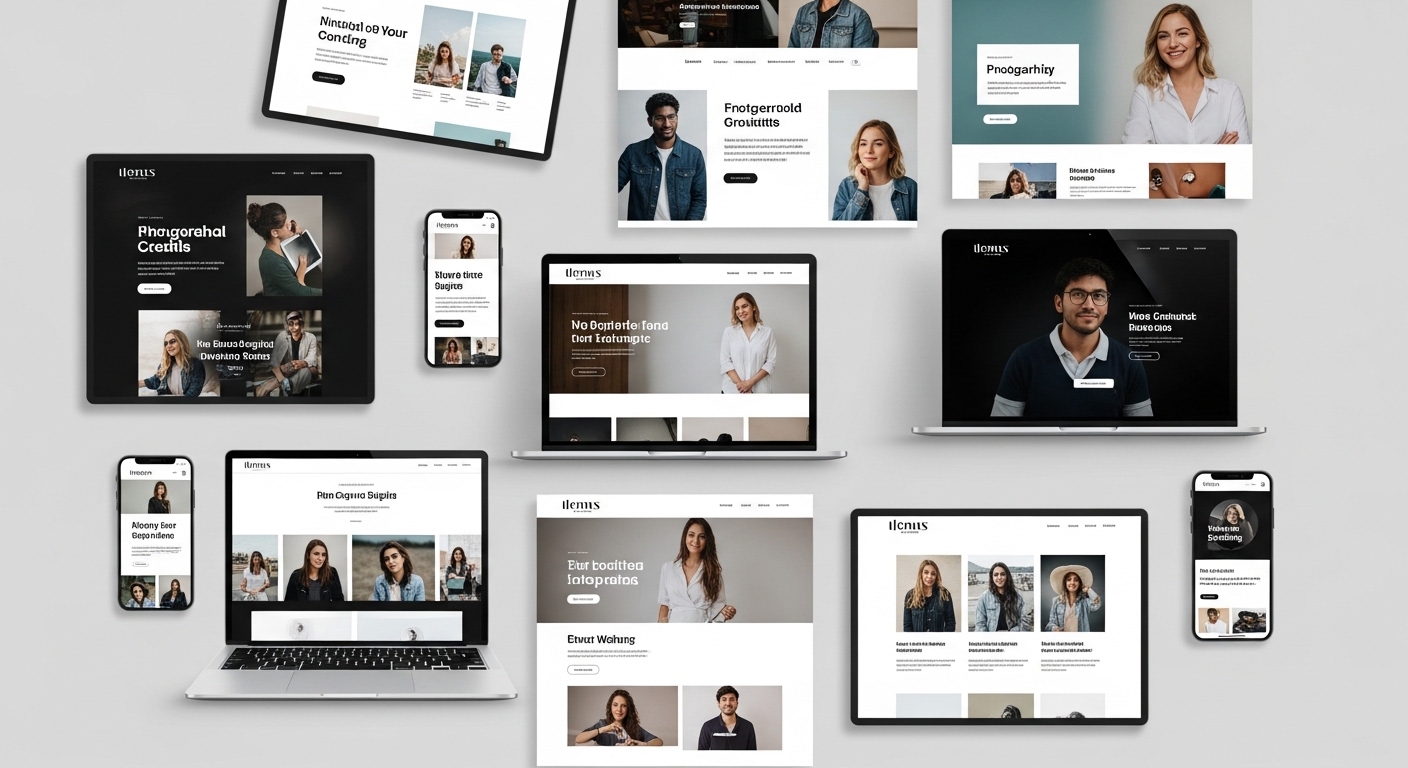
A personal brand site is a strange thing to build: you are simultaneously the product, the founder, and the sales team. For creators, coaches, and consultants, the website has to feel like you while still doing the unglamorous work of capturing emails, booking calls, and selling offers. Too many personal sites drift toward one of two failure modes, an over-designed art project that converts nothing, or a bland link-in-bio page that says nothing. In this guide we cover what a personal-brand site genuinely needs, name eight templates we would actually use, and share the tips and mistakes that separate a memorable presence from a forgettable one.
What a personal-brand site needs
The core tension of a personal brand is intimacy at scale. Your site has to feel personal to a stranger while still functioning as a business. The following elements are non-negotiable.
- A strong hero with a clear promise. Who you help and what changes for them, stated in one line.
- An about section that is actually about them. Your story matters only insofar as it earns trust and relevance.
- Email capture that is impossible to miss. The list is the asset; the site is the funnel.
- Proof. Testimonials, featured logos, audience numbers, or results, shown early.
- A single primary offer path. Book a call, buy the course, or join the list, chosen deliberately.
Our eight picks for 2026
1. Framer — Persona
A Framer template built around a single confident hero, a story section, and an offer block. It launches fast and feels contemporary. Honest note: it is optimized for one primary offer, so if you sell several products it will need restructuring.
2. WordPress — Kadence with the coach starter
Kadence’s coaching-oriented starter sites give consultants a professional base with strong CTA and testimonial blocks. It is fast and owned outright. Expect to spend an afternoon customizing colors and typography to make it feel like you rather than the demo.
3. Webflow — Author
A Webflow template aimed at writers, speakers, and creators, with a blog-forward layout and newsletter signup baked in. Excellent for content-driven personal brands. The caveat is Webflow’s ongoing hosting cost, which is worth it only if you publish regularly.
4. WordPress — Astra with a coach template
Astra remains one of the lightest, most reliable foundations, and its coaching and consultant starter templates cover the essentials. It integrates cleanly with course and membership plugins. It is the practical choice rather than the striking one, so plan for custom styling.
5. Framer — Solo
A minimalist Framer template for creators who want a clean, typography-led page. It is quick to launch and looks premium. Its simplicity is also its limit: it suits a focused personal brand, not a sprawling multi-offer business.
6. WordPress — Blocksy with a personal starter
Blocksy’s header and sticky-CTA controls make it strong for keeping a signup or booking button visible. Its personal-brand demos are clean and modern. You will want the Pro tier for the more advanced layout options.
7. Webflow — Mentor
Designed for coaches and course sellers, Mentor includes offer sections, testimonial sliders, and a clear booking flow. It converts well out of the box. The trade-off is that heavily templated coaching sites can start to look alike, so invest in original photography and copy.
8. Carrd — a one-page starter
For creators who want something live this week, Carrd builds a polished one-pager for a few dollars a year. It is the honest budget pick. It will outgrow you once you need a blog, courses, or complex funnels, but as a starting point it is hard to beat on speed and price.
Comparison at a glance
| Template | Platform | Best for | Approx. price |
|---|---|---|---|
| Persona | Framer | Single-offer brands | ~$69 (check current pricing) |
| Kadence coach | WordPress | Consultants, owned site | Free–$129/yr (check current pricing) |
| Author | Webflow | Writers and speakers | ~$79 (check current pricing) |
| Astra coach | WordPress | Course sellers | Free–$59/yr (check current pricing) |
| Solo | Framer | Minimalist creators | ~$59 (check current pricing) |
| Blocksy personal | WordPress | Sticky-CTA sites | ~$69/yr (check current pricing) |
| Mentor | Webflow | Coaches, offer-led | ~$84 (check current pricing) |
| Carrd one-pager | Carrd | Fast, budget launch | ~$19/yr (check current pricing) |
Matching the template to your stage
The right template depends less on taste than on where you are in your business. If you are just establishing a presence and want to start capturing an audience, speed matters more than flexibility, and Carrd or a single-offer Framer template will get you live without stalling. The mistake at this stage is over-investing in a complex build before you know what you are selling. A simple, fast page that captures emails outperforms an elaborate site that never ships.
Once you have proven an offer and are publishing regularly, the calculus changes. A content-driven creator benefits from a blog-forward Webflow or WordPress setup that compounds search traffic over time. A coach or consultant scaling toward courses and memberships needs a platform that integrates cleanly with payment, scheduling, and membership tools, which is where WordPress with Kadence or Astra earns its place. Think of your template as a stage-appropriate tool rather than a permanent decision; it is normal and healthy to migrate as your business matures and your requirements sharpen.
Tips for a personal brand that converts
- Write the hero for the reader, not for yourself. Lead with the transformation you offer.
- Use one real, high-quality photo of yourself above the fold. People buy from people.
- Give the email list a specific reason to join, a resource or result, not “subscribe for updates.”
- Pick one primary call to action and let everything else support it.
- Keep your about page in service of the reader; end it with a next step, not a full stop.
Common mistakes we see
- Treating the site as an autobiography instead of an offer.
- Burying the email signup in the footer where nobody scrolls.
- Presenting five equal calls to action so visitors choose none.
- Using stock photos that make a personal brand feel impersonal.
- Over-designing until the message disappears behind the animation.
Frequently asked questions
Do I need a full website or just a link-in-bio page?
A link-in-bio page is fine at the very start, but it caps your growth. As soon as you sell an offer or build an email list seriously, a real site with capture and content pays for itself.
Which platform is easiest for non-technical creators?
Framer and Carrd are the quickest to launch with no code. WordPress offers more room to grow but has a steeper learning curve. Choose based on whether you want speed now or flexibility later.
How much should a personal-brand template cost?
Anywhere from around $19 a year for Carrd to roughly $80 for a premium Webflow or Framer template, plus hosting where applicable. Content and photography matter more than the template price. Always check current pricing.
Should I add a blog?
Only if you will publish consistently. A blog drives search traffic and deepens trust, but an abandoned one signals neglect. If you cannot commit, start with a newsletter and add a blog later.