

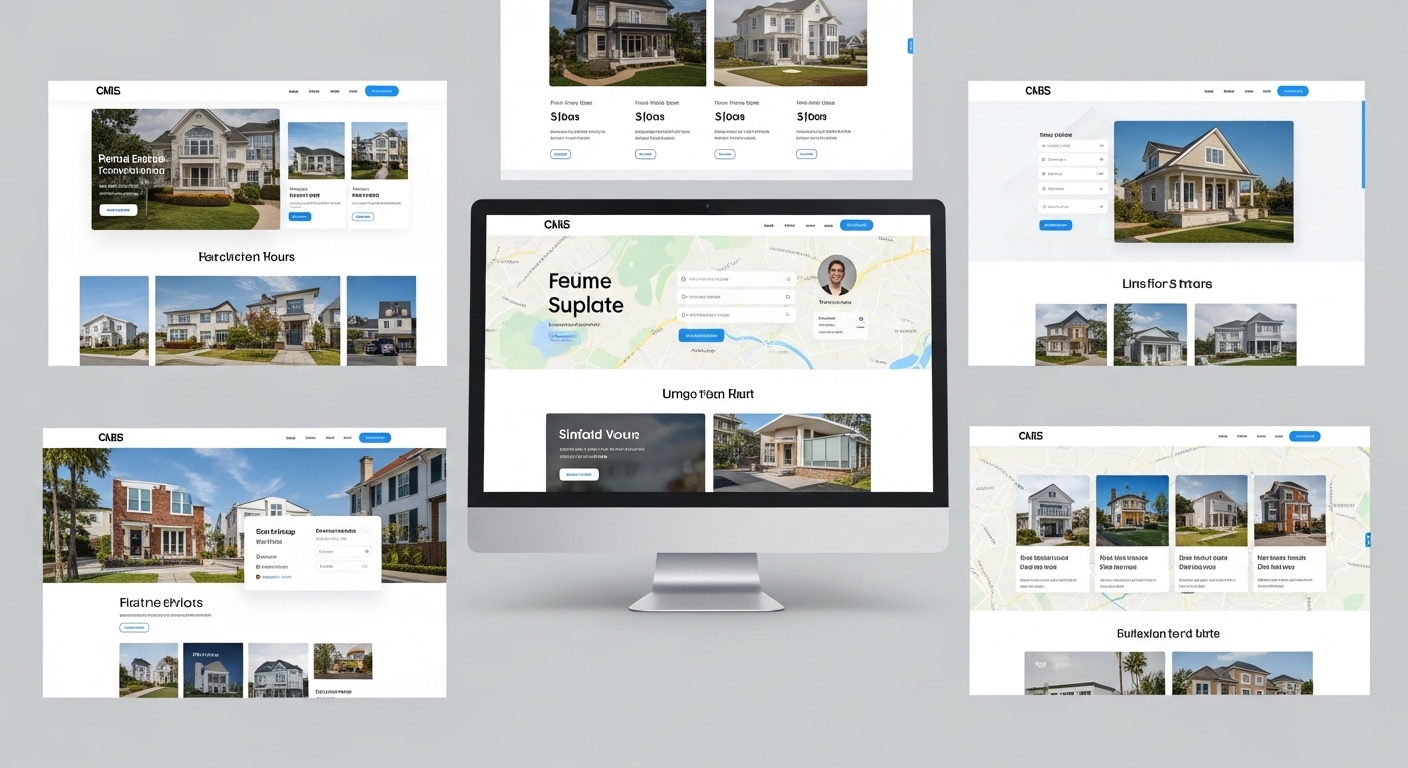
Best Website Templates for Real Estate Agents (2026): High-Converting Picks
We talk to a lot of agents who assume their brokerage page or a Zillow profile is enough to bring in business. It is not. Those platforms own the relationship, control the branding, and route the lead wherever they please. A website you control is the one asset that compounds: every blog post, every neighborhood guide, and every listing page keeps working long after you publish it. In this guide we walk through what actually matters in a real estate template and the options we would put in front of a working agent in 2026.
Why Your Website Is the Engine of Lead Generation
Most buyers and sellers now start their search online before they ever call an agent. When they land on a fast, trustworthy site that answers their questions, they are far more likely to hand over an email address or book a showing. A good website does three jobs at once: it builds credibility, it captures contact details, and it qualifies the visitor before you ever pick up the phone. We have seen agents cut their cost per lead in half simply by replacing a generic page with a template built around search and capture. The site becomes a 24-hour employee that never sleeps, never forgets a follow-up, and never gets tired of answering the same first-time-buyer questions.
The difference between a lead-generation site and a brochure site comes down to intent. A brochure shows what you have done. A lead-generation site is engineered to get the visitor to take one specific action on every page. That is the mindset we bring to every template we recommend below.
The Essential Features Every Real Estate Template Needs
Before we name specific products, let us be clear about the non-negotiable features. If a template lacks any of these, we would not build a business on it.
- Property listings. You need a structured way to display homes with photos, price, beds, baths, and status. A blog post per listing does not scale.
- IDX and search. IDX (Internet Data Exchange) pulls live MLS data so visitors can search the full local market, not just your own listings. This is what keeps them on your site instead of fleeing to a portal.
- Agent profiles. People hire people. Bios, photos, reviews, and areas of focus humanize the brand and build the trust that converts.
- Lead capture. Saved-search alerts, “request a showing” forms, and gated market reports turn anonymous traffic into a pipeline you can nurture.
- Map integration. An interactive map lets buyers explore by school, commute, or neighborhood, which is how most people actually shop.
- Mobile responsiveness. The majority of property searches happen on a phone. If the template is not flawless on small screens, you lose the lead.
- Speed. A slow site ranks poorly and bounces visitors. We treat sub-three-second load times as the floor, not the goal.
Our Top Template and Theme Picks for 2026
These are real, widely used options. We are not being paid to rank them, and we will tell you where each one falls short.
| Template / Theme | Best For | Honest Note |
|---|---|---|
| Houzez | Agents and small brokerages wanting a full listing engine | Feature-packed and flexible, but the settings can overwhelm a beginner. Pair it with a good caching plugin. |
| RealHomes | Clean, conversion-focused single-agent sites | Excellent out of the box and well documented. IDX often needs a separate plugin like dsIDXpress. |
| WP Residence | Agencies that want bookings and membership features | Strong search and front-end submission. Heavier than average, so watch your page weight. |
| Real Estate 7 | Agents who want demos and CRM-style lead tools | Includes built-in CRM lite and_idx. Support is solid, but the design language is a bit dated. |
| Divi Real Estate Layouts | Designers who want total visual control | Not a dedicated theme, but the layout packs are excellent. You build the listing logic yourself. |
| Squarespace | Agents who refuse to manage hosting or updates | Beautiful and simple, but IDX is limited and you trade control for convenience. |
| Placester | MLS-focused agents wanting an all-in-one | Tight MLS integration, but it is a hosted platform, so you are locked into their ecosystem and pricing. |
Our practical take: if you are serious about owning your pipeline, start with WordPress and a purpose-built theme like Houzez or RealHomes. If you want zero maintenance and can accept some limitations, Squarespace or Placester will get you live in a weekend.
Lead-Generation Tips That Actually Move the Needle
- Offer a gated “neighborhood report” or “first-time buyer guide” in exchange for an email. This captures intent better than a generic newsletter signup.
- Enable saved-search alerts so buyers self-qualify and you get notified the moment they engage.
- Add a sticky “Book a call” button on mobile. Friction is the enemy of conversion.
- Publish one local market update per month. It feeds SEO and positions you as the neighborhood expert.
- Follow up within five minutes of a form submission. Speed of response beats every other variable in closing leads.
Common Mistakes We See Agents Make
The first mistake is treating the website like a static business card. If there is no clear next step on every page, the visitor leaves and you never hear from them. The second is overloading the homepage with sliders and animations that crush load speed. The third is ignoring mobile, even though that is where most searches happen. The fourth is skipping IDX entirely and showing only your own handful of listings, which sends serious buyers straight back to a portal. Finally, many agents never set up analytics, so they have no idea which pages actually generate calls.
Frequently Asked Questions
Do I need IDX to succeed as an agent?
Not strictly, but it is the single biggest reason a visitor stays on your site instead of a portal. If your budget allows, we consider it worth the monthly fee for the search retention alone.
Is WordPress better than Squarespace for real estate?
For control, SEO, and long-term ownership, yes. For simplicity and zero maintenance, Squarespace wins. Choose based on how much time you want to spend on the backend.
How much should a good real estate website cost?
A quality theme runs between fifty and ninety dollars once, plus hosting of roughly ten to thirty dollars a month and optional IDX fees. You can launch properly for well under a thousand dollars in year one.
How fast should my site load?
Aim for under three seconds on mobile over a average connection. Use a caching plugin, compress images, and avoid heavy page builders if speed is a priority.
Pick a template that covers the essentials above, set up one strong lead capture offer, and ship it. The agents winning in 2026 are not the ones with the flashiest sites. They are the ones whose sites quietly capture and follow up with every visitor, every day.